

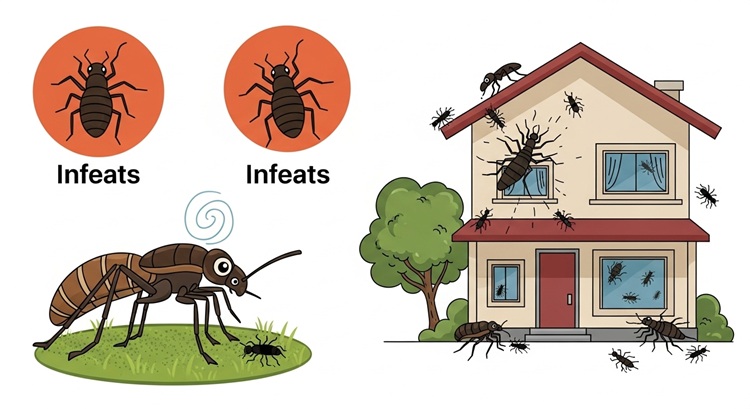
Homeowners are moving toward turf more and more as they rethink yard maintenance and water usage. In addition to water-saving benefits and reduced lawn care, many people ask: Does synthetic grass eliminate pest problems that are common in natural lawns, especially in summer when ants and other pests thrive?
Understanding what artificial turf does to pest habitat helps you make smarter landscaping decisions, especially if you have already arranged services with Pointe Pest Control to handle current infestations and want to prevent future issues.
How Artificial Turf Might Alter Pest Activity Patterns
Synthetic lawns create a different environment compared to natural grass:
- Reduced watering needs mean less moisture that attracts ants, earwigs, and other pests.
- No natural thatch buildup removes a key habitat where insects breed and feed.
- Heat retention during summer can make turf surfaces hotter than natural grass, discouraging some insects.
- Fewer food sources since there is no living grass, soil organisms, or organic decay.
Limited Organic Material Compared to Natural Lawns
Artificial turf does not produce clippings or require fertilization. It also does not create organic layers that break down into soil. Without these natural processes, many insects and microorganisms lose their food source, which reduces the ecosystem that supports pest populations.
How Drainage Layers Affect Moisture Levels
Properly installed artificial turf includes drainage systems that prevent water from pooling underneath. This helps keep the area dry and less attractive to pests that depend on moisture.
However, poor installation or blocked drainage can trap water and create hidden pest problems beneath the surface. Regular inspection is important to avoid these issues.
Pests Still Attracted to Artificial Turf Areas
Even though artificial turf reduces some pest attractants, it does not eliminate all pest activity:
- Spiders may still build webs along edges and corners.
- Ants and other insects may forage from nearby colonies.
- Crickets and grasshoppers can move freely across yards regardless of surface type.
- Rodents may travel across turf when moving between shelter and food sources.
Assessing Pest Risks Based on Overall Landscaping
Artificial turf can reduce certain pest habitats, especially those that depend on moisture and soil. However, it is only one part of the bigger picture. Other elements like planting beds, mulch, irrigation, and general property maintenance still influence pest activity.Working with professionals such as Pointe Pest and Pointe Pest Control ensures a more complete pest prevention strategy. They can provide guidance tailored to Tumwater conditions and help you manage pest risks throughout the year.