

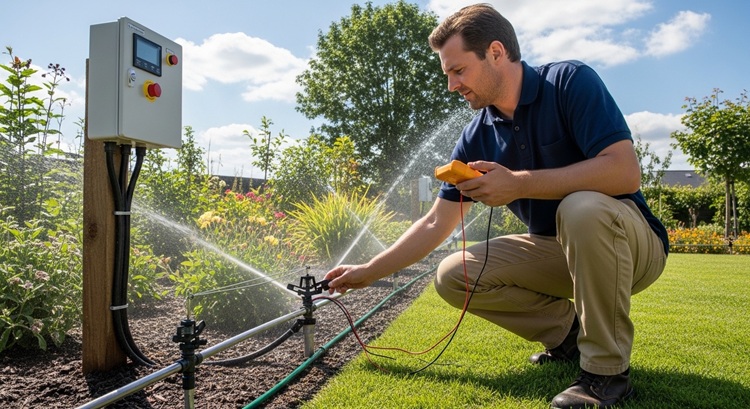
A garden watering system usually gets judged once it is already in the ground, when the controls are live, the planting is established and people can see whether everything looks healthy. By that stage, though, many of the most important decisions have already been made. Much of the long-term performance comes down to the choices garden irrigation system installers make before installation even begins, particularly when they are assessing the site, dividing zones and deciding how the system should respond to the way the garden will actually be used.
That early stage matters because irrigation is not simply about getting water from one point to another. It is about applying the right amount, in the right way, to areas that may behave very differently from each other. A garden can include lawn, mixed borders, containers, hedging and newly planted sections, all within one connected layout. Treating that as a single uniform space usually leads to compromise.
Good Irrigation Starts with Understanding the Garden Properly
The most effective watering systems begin with observation rather than equipment. Sun exposure, slope, soil type, drainage and plant maturity all affect how quickly an area dries out and how much water it is likely to need. Even within a relatively modest garden, those conditions can vary more than people expect.
A paved area that reflects heat onto nearby planting creates a different environment from a shaded border protected by fencing or mature shrubs. A lawn in full sun behaves differently from a bed filled with established planting that already holds moisture well. If those distinctions are not recognised at the planning stage, the finished system may still operate, but it will often do so inefficiently.
Professional planning reduces that risk by building the system around the site itself rather than forcing the site to fit a generic design.
Zones Only Work Well When They Reflect Real Conditions
Zoning is often mentioned as though it is automatically a sign of a good irrigation design, but the quality of the zoning matters more than the fact that it exists. Dividing a garden into sections is only useful if those sections reflect genuine differences in watering need.
If plants with very different moisture requirements are grouped together for convenience, the system becomes harder to manage properly. One part of the zone will usually get more water than it needs while another struggles with too little. That imbalance often leads to manual intervention, schedule adjustments and ongoing inefficiency.
When zones are planned well, they support much more accurate control. Water can be applied in a way that suits the conditions of each area rather than averaging them out. That usually means healthier planting, less waste and a system that feels easier to live with over time.
Layout Decisions Affect More Than Coverage
It is easy to assume that the main design challenge is achieving physical coverage, making sure every area receives water. Coverage matters, but layout decisions affect much more than that. They influence access, maintenance, reliability and how well the system integrates into the daily use of the garden.
Poorly placed components can create awkward mowing lines, interfere with regular maintenance or become more vulnerable to accidental damage. Pipework routes that make sense on paper may complicate future changes if they are not considered carefully in relation to paths, borders or likely planting development.
Thoughtful planning avoids these issues by looking beyond the immediate technical requirement. A good system should work practically as well as hydraulically. It should support the garden without constantly reminding people that it is there.
Timing and Control Need to Match the Design
A common misconception is that a controller can fix almost any weakness in the system. In reality, settings only work well when the physical layout has been planned properly in the first place. A beautifully programmed schedule cannot compensate fully for poor zoning, uneven distribution or badly matched components.
Timing, pressure and water delivery all depend on the design working as a complete system. If one section receives too much overlap while another struggles at the edge of its range, the controls become a form of damage limitation rather than a tool for fine tuning. Good planning makes the controller more effective because it gives those settings a stable foundation.
This is one of the less obvious advantages of professional input. The benefit is not only that the system is installed neatly, but that the logic behind it makes control simpler and more precise later on.
Better Planning Reduces the Need for Correction
Gardens change, and all irrigation systems need reviewing from time to time, but there is a clear difference between sensible adjustment and avoidable correction. Systems that are rushed into place or based on weak assumptions often need fixing once their shortcomings become visible. Heads get moved, zones get altered and watering schedules become increasingly complicated as people try to work around the original design.
That kind of correction is frustrating because it usually proves that the system was not properly matched to the site in the first place. By contrast, a well-planned system tends to settle more naturally. It does not need constant intervention because the core decisions were made with the garden’s real conditions in mind.
The Best Results Are Usually Decided Early
The visible part of an irrigation system is only part of the story. Its real success often comes from the early decisions that nobody notices once the work is finished, how the garden was assessed, how watering needs were interpreted and how the system was designed to function in everyday use.
That is why professional planning matters so much from day one. It shapes whether the finished setup feels efficient, balanced and reliable, or whether it spends its life being adjusted to compensate for things that should have been resolved at the start. In garden irrigation, the strongest results usually come from getting the thinking right before the first component is ever fitted.